
Tarantula Care Guide
Tarantula care basics from Amy's Ark Exotic Animal Rescue: housing, humidity, feeding, molting and handling, from a rescue that loves spiders.
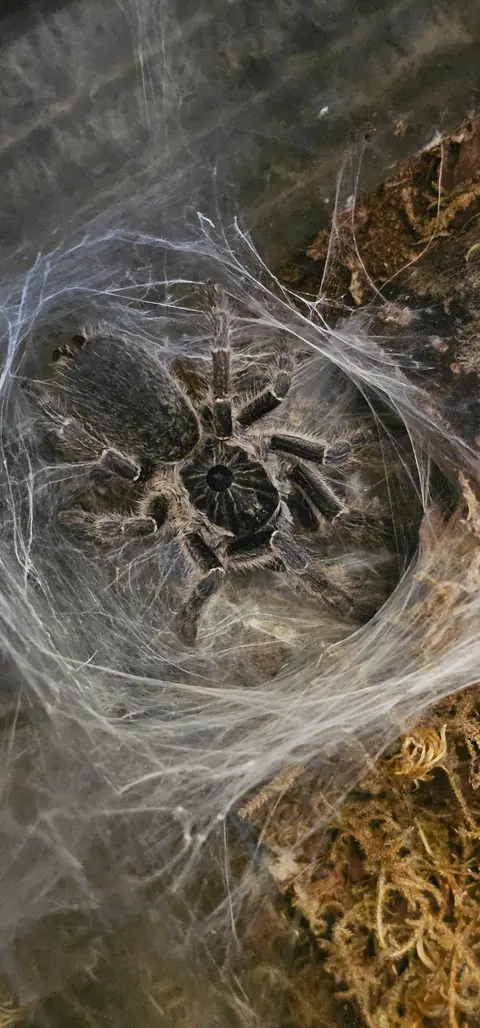
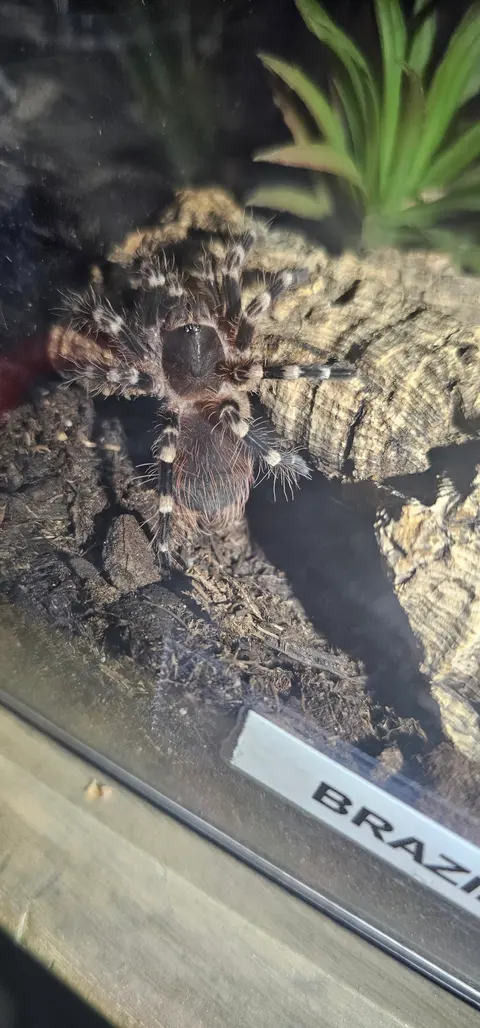
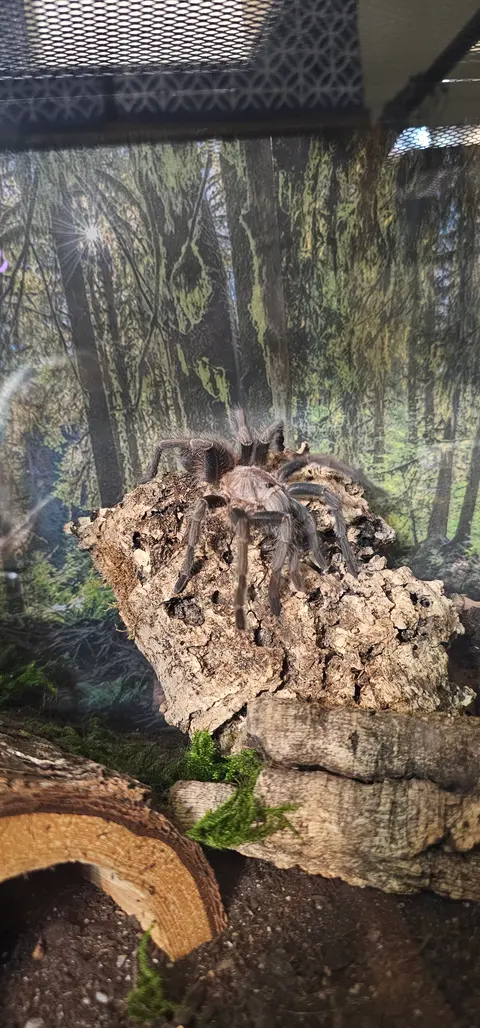
Amy really loves spiders. The Ark is home to several tarantulas, including a Straight Horned Baboon, an Emerald Beauty Birdeater, a Curly Hair and a Brazilian White Knee, along with jumping, wolf and velvet spiders. Amy keeps most of the spiders that are surrendered to the Ark.
This is a general guide. Needs vary a lot between species, so research your tarantula's exact species.
Housing
- Keep one tarantula per enclosure.
- Use a secure, escape-proof enclosure with good ventilation.
- Ground-dwelling species need floor space and substrate deep enough to burrow. Tree-dwelling species need height and something to climb.
- Give them a hide, such as a piece of cork bark.
- Use a low enclosure for ground dwellers. A fall from height can seriously injure a heavy tarantula.
Water and humidity
Keep a shallow water dish available. Humidity needs depend on the species, so look up your tarantula's natural habitat.
Feeding
Tarantulas eat appropriately sized insects. Remove uneaten prey within a day, and never leave live prey in the enclosure with a molting tarantula.
Molting
Tarantulas grow by molting. Before a molt, they often stop eating and may seal themselves in. Leave them alone and do not handle them until the new exoskeleton has hardened.
Handling
Tarantulas are best treated as display animals. Some species can flick irritating hairs, and some, such as baboon species, are fast and defensive. A short fall can be fatal.
Questions about a spider? Contact Amy.